
Jira Forms in Business Process Management
In short: A form collects structured data at a step of a business process. In Jira, every form belongs to a work type. Because Flower creates a Jira work item for each activity of a process, you can give every activity its own form by choosing its work type. Forms can also start a process: when a submitted form creates a work item of a mapped work type, Flower starts the process.
Last updated: October 2026
What Is a Form in Business Process Management?
In business process management (BPM), a form is a document or user interface with fields for collecting data. Forms capture information such as user input or feedback.
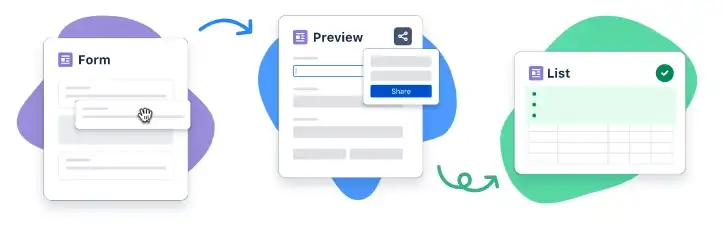
Forms are useful at many stages of a process: to start a process, to provide input to a step, and to record the result. Documents such as contracts, proposals, invoices, and reports are another way to collect data. In Jira, you can use both in parallel: forms collect the structured data, and documents are attached to a work item or linked from Confluence.
What Can Jira Forms Do?
- Collect information from process participants.
- Show only the fields that are relevant for the person who submits a request. This differs from Jira’s internal create screen, which can contain fields for internal team members.
- Rename field labels and change their order, for example show task details and deliverables instead of description.
- Enforce mandatory fields so that the required information is captured.
- Preview a form before sharing it, and share it by link.
- Turn a submitted form into a Jira work item.
Which Types of Forms Does Jira Offer?
| Where | How forms work |
|---|---|
| Business and software spaces | Select Forms in the space navigation. Each form belongs to a work type, and a submitted response is converted to a work item of this work type. Space admins create the forms. |
| Service spaces (Jira Service Management) | Forms are configured under Space settings > Request management > Forms. They can be attached to request types for the portal, used to create work items, or attached to existing work items. The form builder offers more options, for example conditional logic. |
| Marketplace apps | Apps add advanced form features. |
| Confluence pages | Link a Confluence page to a work item to provide instructions or documents. |
Forms work in team-managed and company-managed spaces. Learn more about creating forms in Jira .
How to Create a Form in a Business or Software Space
- Select Forms in the space navigation.
- Select a template or a blank form.
- Select the work type of the form. The fields of the form depend on this work type.
- Choose which fields appear, rename them, and set their order.
- Use Preview to see the form as other people see it.
- Share the form.
How to Use Jira Forms in a Flower Process
Flower creates a Jira work item for every activity of a process. You can therefore store process-related data directly in the work item. A Jira form always belongs to a work type, so make sure that the right work type is linked to your activity. If you want to collect different information at each step, create different forms and work types. All these forms are connected to the Flower process instance and can be evaluated later.
- Create a Jira form for a work type.
- Link this work type with your Flower activity. Select the activity in the Flower modeler and set the work type in the properties panel. If you do not select one, the default work type applies.
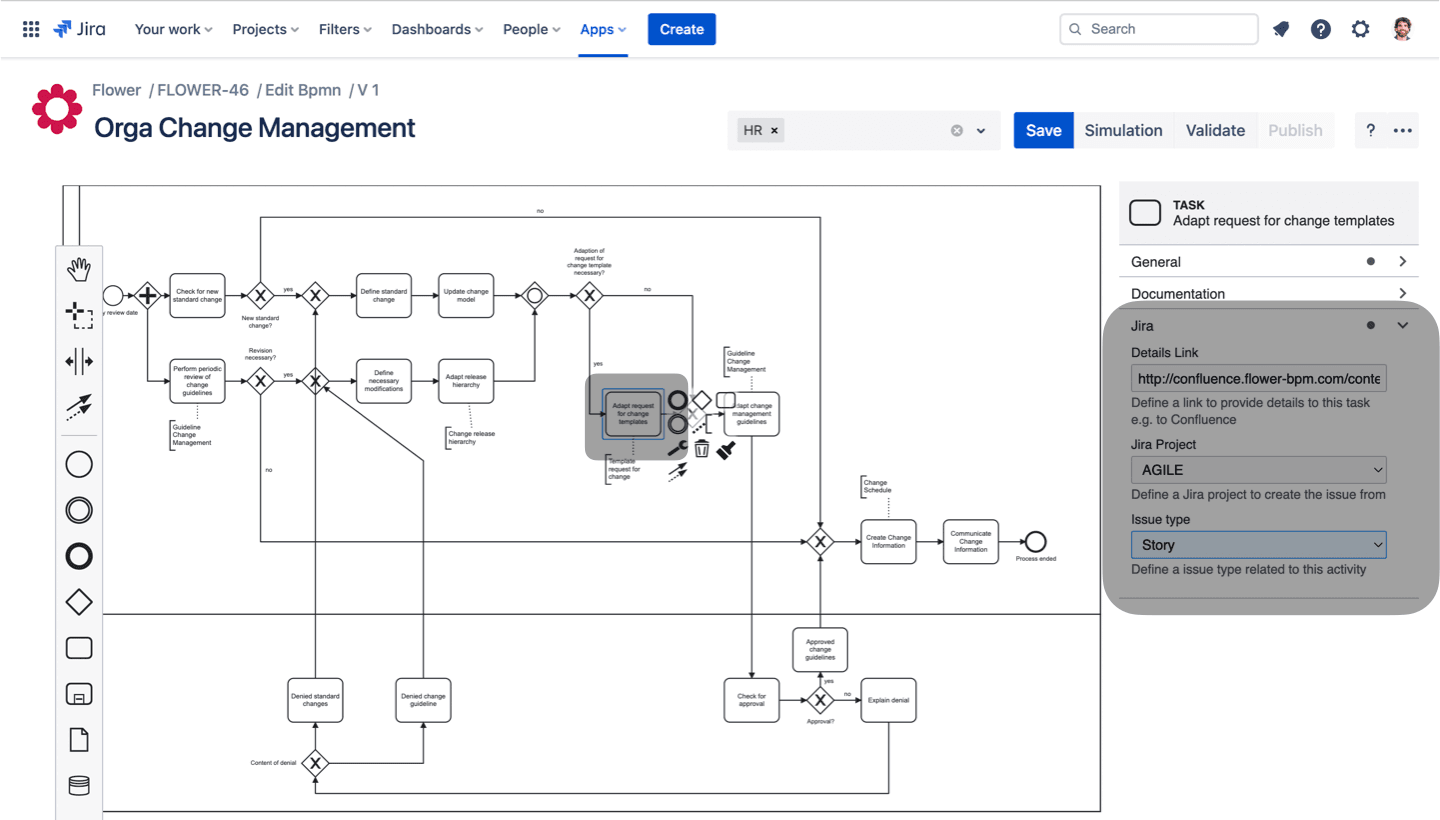
- Launch a Flower process instance. The form appears in each Jira work item next to the BPMN diagram and collects the information you need while the process runs. Different work types show different fields.
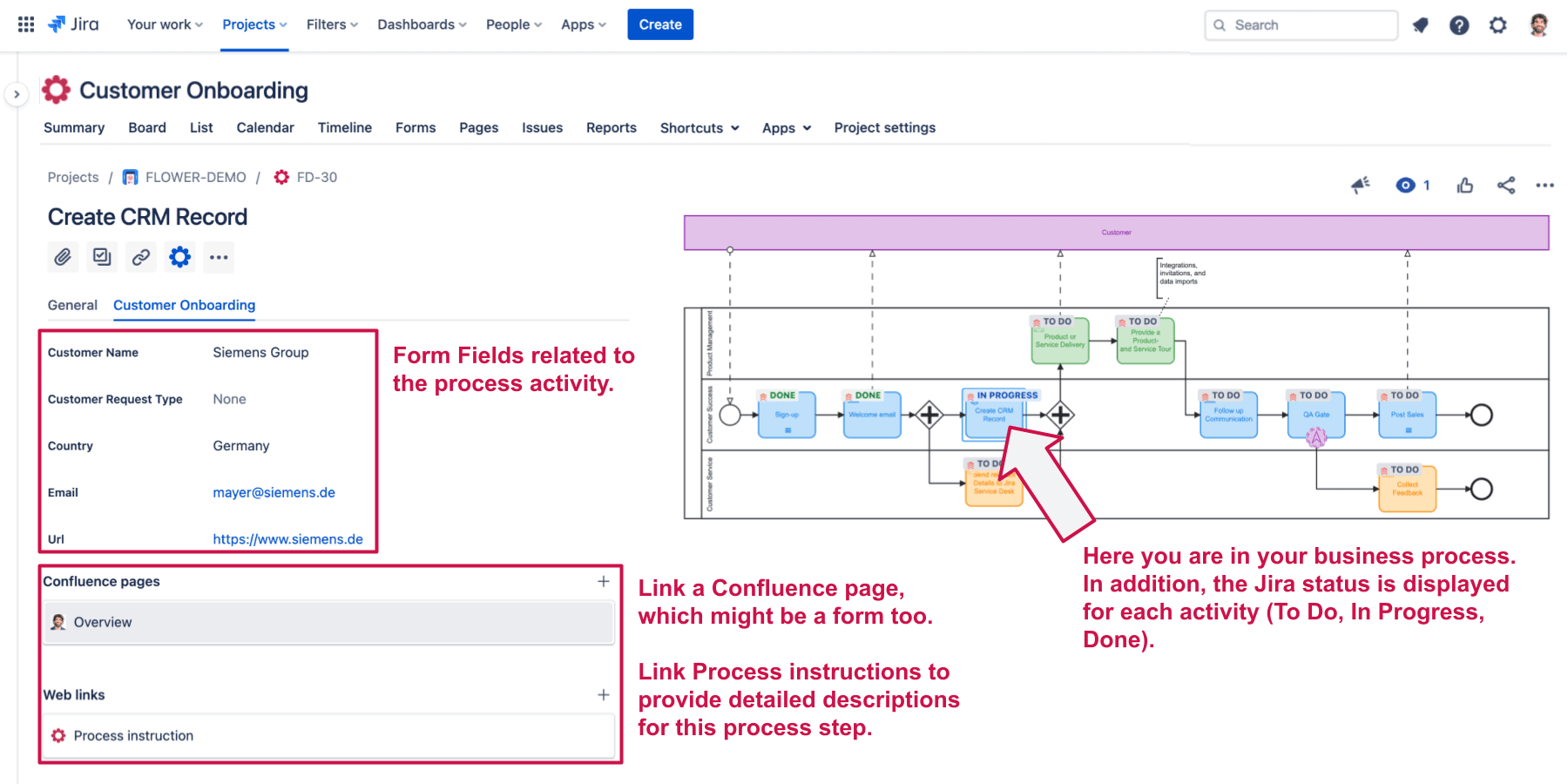
The work item shows everything at a glance:
- What the process looks like
- Where you are in the process
- The Jira status of all related work items
- All related form data and attached documents
- Linked process instructions, as a web link or a Confluence page
Forms on the Process Instance and on Activities
- A form on the process instance collects data that is available in the whole process, for example the data of a request.
- A form on an activity collects data for one step, for example a decision or a check.
Start a Process from a Form
When a submitted form creates a work item whose work type is mapped to a process model, Flower starts a process instance, and the work item becomes the process instance. Set up the mapping on the Work Type Mapping tab of the Flower Settings. See Setup Flower.
Required Fields
Mark a field as mandatory in a form only if a person always creates the work item by submitting that form. Flower creates activities automatically and cannot fill in required fields. To make sure that a field is filled before a task is resolved, use a workflow validator instead. See Jira Forms Meets Flower BPM for details.
How to Link a Confluence Page to a Business Process
Use the link dialog in Jira to connect work items and Confluence pages. This is ideal for a knowledge base article or work instruction that belongs to a process activity.
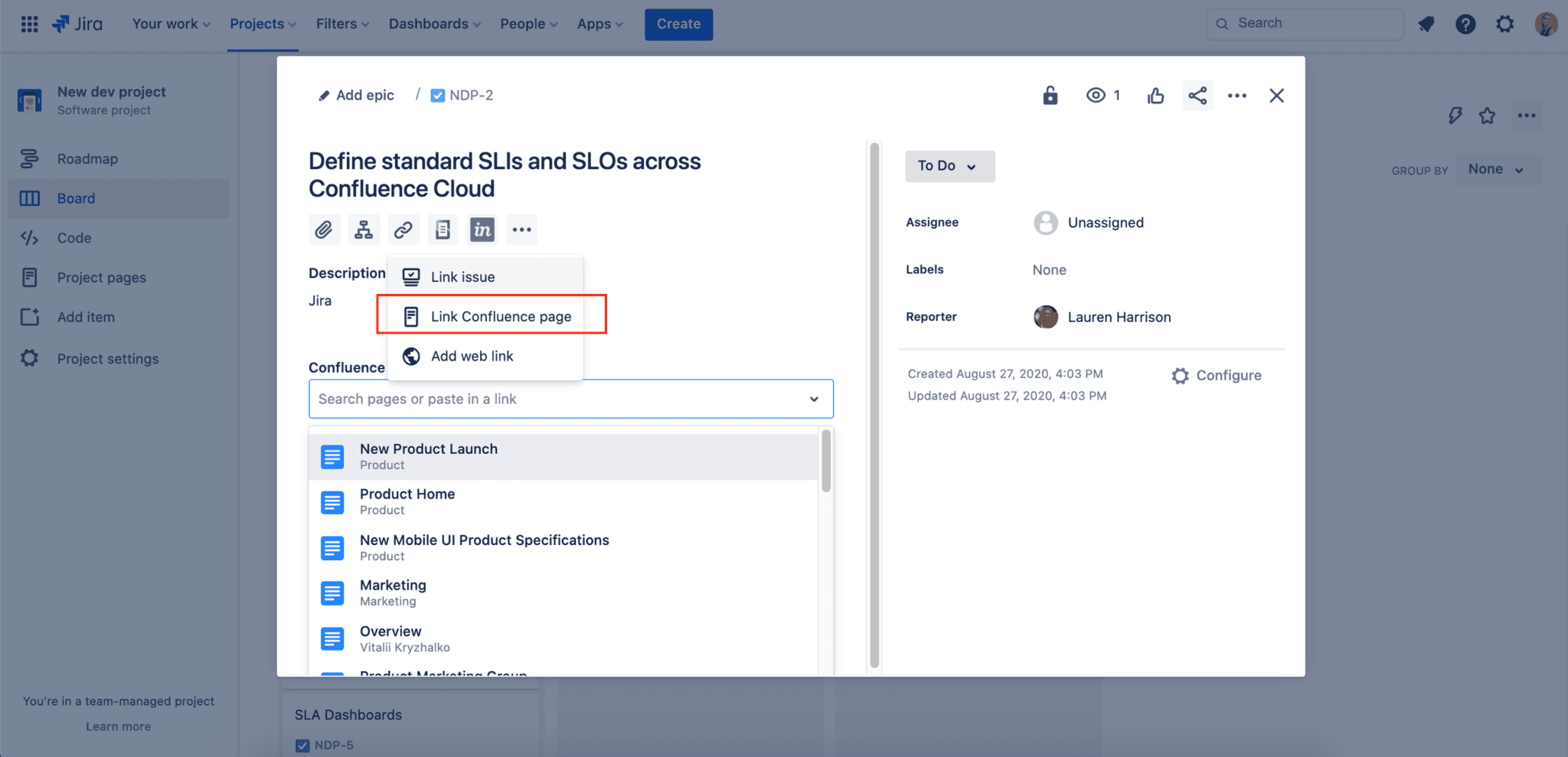
Learn more about linking Confluence pages with Jira work items
Frequently Asked Questions
Can I use Jira Forms in a Flower process?
Yes. Each form belongs to a work type, and you choose the work type for each activity of the process.
Can a form start a Flower process?
Yes. If the work type of the work item created by a form is mapped to a process model, Flower starts the process.
Should I mark form fields as mandatory?
Only for forms that people submit themselves. For activities that Flower creates, use a workflow validator.
About Flower
Flower – Business Process & Workflow Automation (BPMN) for Jira is an app on the Atlassian Marketplace for Jira Cloud and Jira Data Center. It lets you model business processes in BPMN 2.0 and run them in Jira: for every activity of a process, Flower creates a Jira work item, assigns it through swimlanes, shows its status in the process diagram, and continues the process when the work item is resolved. Flower stores all process data in Jira, so your permissions, boards, and reports keep working. Flower is Cloud Fortified and has been on the Atlassian Marketplace for more than ten years.
Start a free 30-day trial on the Atlassian Marketplace or follow the Get Started guide.